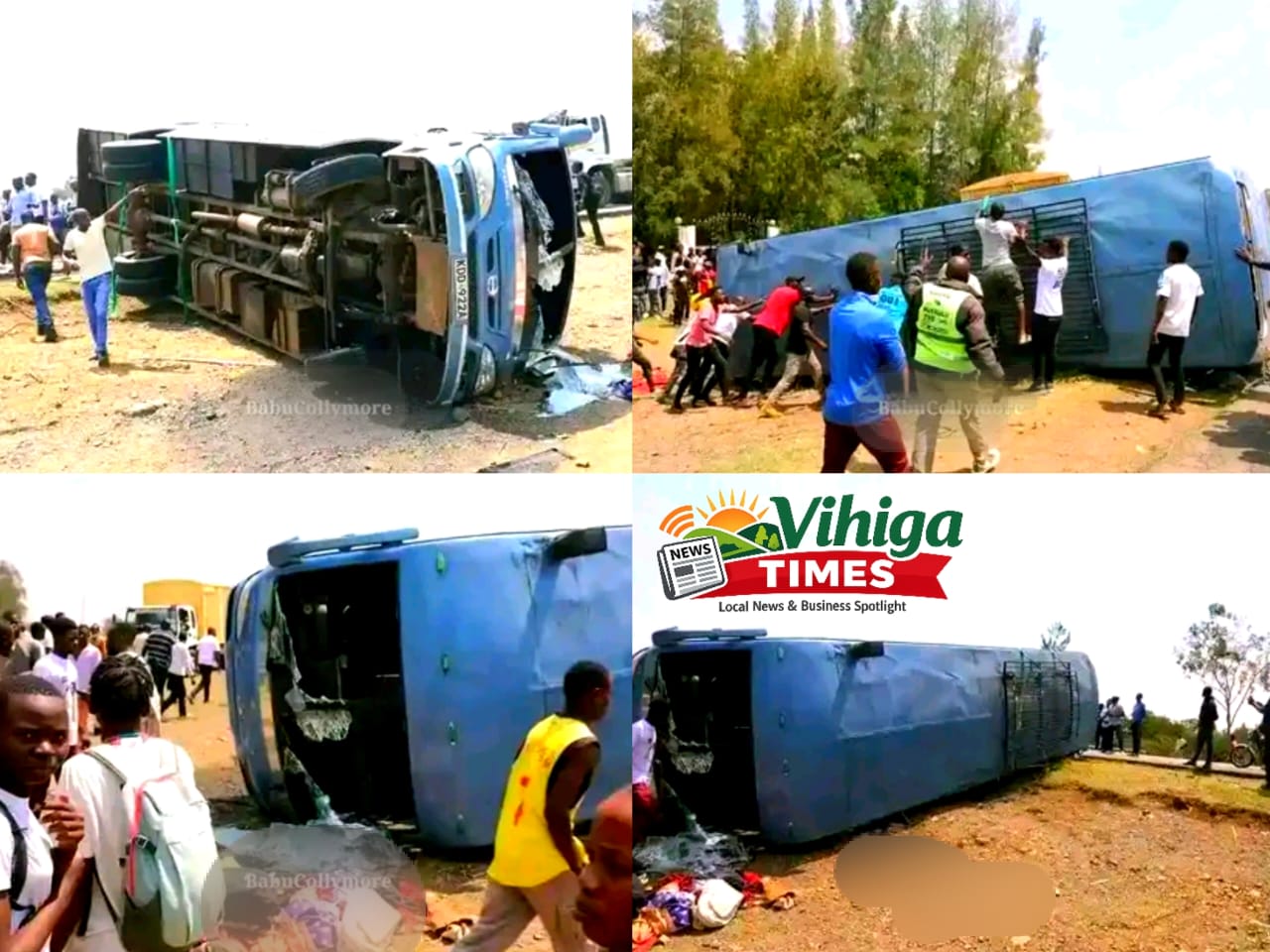
Two Technical University of Mombasa students died after a university bus carrying mourners overturned near Ahero in Kisumu County. The students were travelling to attend the funeral of former TUM student leader Elvis Otieno, popularly known as "Beast."
The crash happened on Friday, August 7, along the Awasi–Ahero section of the Kisumu–Awasi Highway. TUM said 29 other students sustained injuries and were taken to Lisa Hospital in Ahero and Jaramogi Oginga Odinga Teaching and Referral Hospital for treatment.
According to the university's account, the bus driver attempted to avoid a head-on collision with an oncoming saloon car that was allegedly travelling at high speed. The driver lost control during the manoeuvre, causing the bus to overturn.
The university confirmed that the two students who died were male. Their deaths have added another painful loss to a TUM community already travelling to mourn a former student leader.
Official Response
TUM Vice-Chancellor Professor Laila Abubakar confirmed the fatalities and expressed condolences to the families, friends and colleagues of the students. The university also said it was supporting those injured and coordinating with medical teams and relevant authorities.
An update reported on Saturday said 14 injured students had been discharged, while 15 remained in hospital receiving treatment. The condition of those still admitted was not detailed in the available reports.
Police and traffic investigators are expected to establish how the collision occurred. Questions may include the speed and position of the saloon car, the bus driver's actions, road conditions and whether all passenger-safety requirements were observed.
Why This Matters
The crash has raised concern about the safety of large student groups travelling long distances for funerals and other university events. Such journeys often involve emotional scenes, crowded vehicles and pressure to keep moving, but passengers and drivers still need to follow basic road-safety rules.
Videos and photographs circulating online reportedly show some passengers hanging from the bus windows and doors, while others appear to be standing on or climbing onto the outside of the vehicle. The material should be verified as part of any formal investigation, and it has not been established that the behaviour contributed to the crash.
Regardless of the cause, riding outside a moving vehicle creates a serious risk. Drivers and trip organisers have a responsibility to stop and address unsafe conduct rather than continue a journey while passengers are exposed to danger.
Community Impact or Background Context
The students were reportedly travelling to accompany their colleague's remains to the Awasi area for burial. Instead, the journey ended with two families preparing to bury their own children and dozens of students receiving medical care.
The incident has also prompted discussion about the role of passengers. Students travelling in groups may feel encouraged to dance, record videos or behave noisily, especially when friends are present. However, excitement or peer pressure does not make dangerous conduct safe.
Universities, student leaders and transport providers may now face calls to review how funeral convoys and other group trips are organised. Clear passenger briefings, designated trip officials and firm enforcement of safety rules could help prevent similar incidents.
Safety & Prevention
Passengers should remain inside a moving vehicle and use available seat belts where provided. They should not sit on roofs, stand on bumpers, hang from windows or doors, or encourage others to take such risks.
Drivers and trip organisers should stop the vehicle if passengers behave dangerously, check that doors are secured and ensure that vehicles are not overloaded. Any vehicle travelling in a convoy should also maintain a safe speed and distance from other road users.
Students who notice unsafe behaviour can help by reporting it to the driver, trip coordinator or student leader before the journey continues.
What Happens Next
Investigators are expected to examine the crash scene, the vehicles involved and statements from passengers and witnesses. The condition of the students still receiving treatment will also be closely watched by their families and the university.
TUM is likely to provide further updates on the injured students, funeral arrangements and support for the affected families. The cause of the crash remains subject to official investigation.