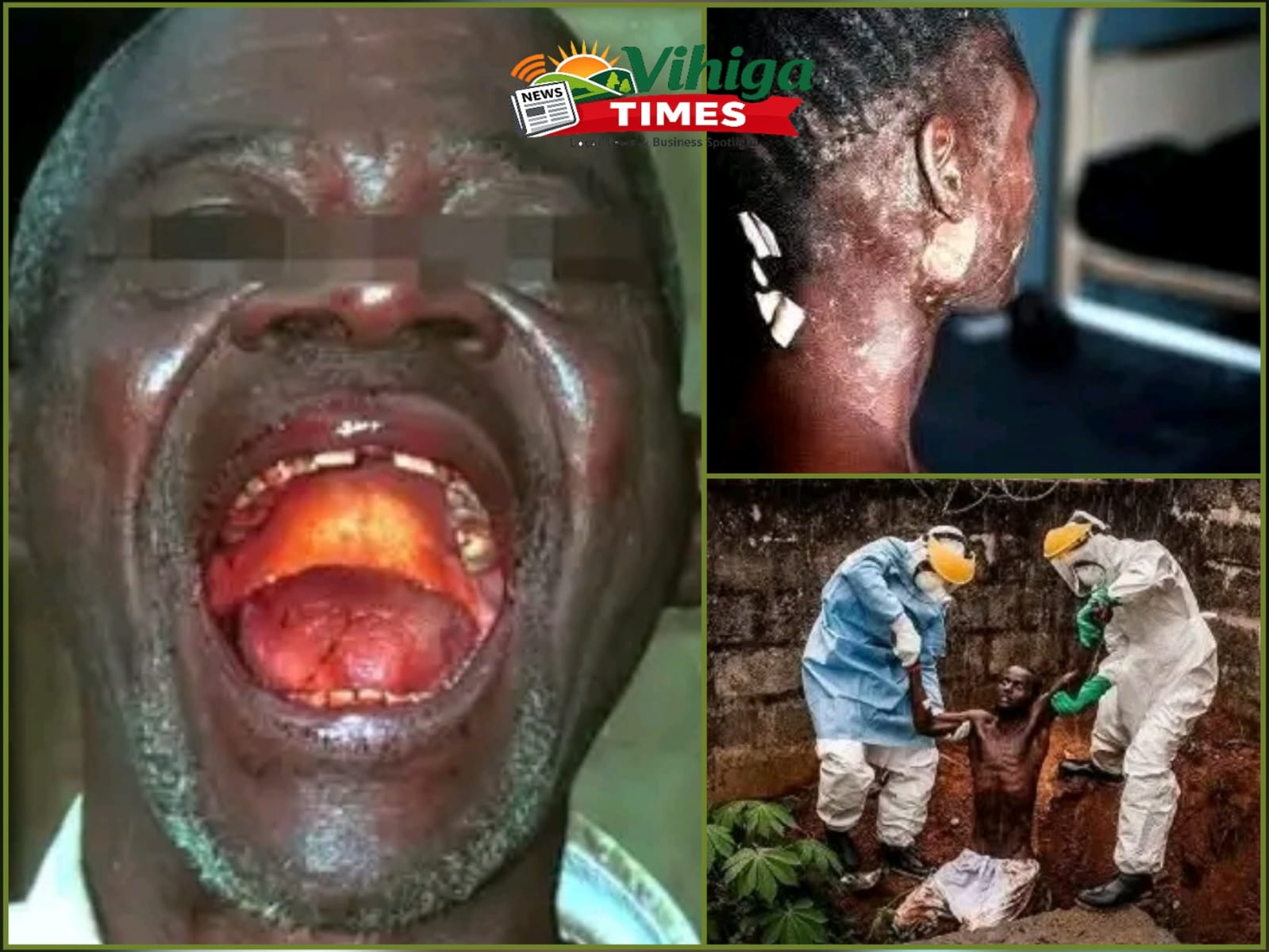
Health authorities are monitoring a 2026 outbreak of Ebola involving the Bundibugyo strain and have issued guidance for residents across Kenya, including Vihiga County. Officials say the virus spreads mainly through direct contact with the bodily fluids of infected people or animals and through contaminated objects. The Bundibugyo strain is being tracked by national and regional health teams because it can cause serious illness, although experts note its death rate is generally lower than some other Ebola strains.
Symptoms can appear between two and 21 days after exposure. Early signs include fever, fatigue, muscle pain, headache and sore throat. As illness progresses, patients may develop vomiting, diarrhea, skin rash and, in severe cases, internal or external bleeding and organ failure. Health authorities stress that early detection and supportive care improve survival chances.
What Happened
Health authorities are monitoring a 2026 outbreak of Ebola involving the Bundibugyo strain and have issued guidance for residents across Kenya, including Vihiga County. Officials say the virus spreads mainly through direct contact with the bodily fluids of infected people or animals and through contaminated objects. The Bundibugyo strain is being tracked by national and regional health teams because it can cause serious illness, although experts note its death rate is generally lower than some other Ebola strains.
Symptoms can appear between two and 21 days after exposure. Early signs include fever, fatigue, muscle pain, headache and sore throat. As illness progresses, patients may develop vomiting, diarrhea, skin rash and, in severe cases, internal or external bleeding and organ failure. Health authorities stress that early detection and supportive care improve survival chances.
Official Response
The Ministry of Health and county health teams have activated surveillance and community-awareness measures to identify cases early and limit spread. Rapid response units are coordinating testing and contact tracing with support from regional laboratories and partner agencies. Authorities had not yet released an official statement at the time of publication. [Official Statement Link Placeholder]
Local health centres in Vihiga are reinforcing infection prevention routines, supplying personal protective equipment to frontline workers and setting up triage points for anyone reporting compatible symptoms. Hospitals and clinics are being advised to follow strict waste-management protocols and to isolate suspected cases while arranging safe transport to treatment centres.
Why This Matters
Ebola outbreaks affect more than patients — they place pressure on health services, disrupt markets and raise anxiety in communities where people rely on daily work and close social ties. For Vihiga families, quick identification of cases matters because it reduces the chance that caregivers, market vendors or health workers will be exposed. Unsafe burial practices and reuse of unsterilised medical equipment are known drivers of spread; preventing these reduces wider community risk.
- Pressure on local health services and frontline workers across Vihiga County.
- Disruption of markets, trade and daily work for families dependent on daily wages.
- Risk of exposure to caregivers, market vendors and health workers without protection.
- Renewed calls for handwashing stations, PPE supplies and safe burial protocols.
Because the virus does not spread through casual airborne contact like influenza or COVID-19, routine interactions such as passing someone on the road carry low risk. The primary concerns are close caregiving, handling of sick or dead bodies without protection, and preparation or sale of bushmeat from infected wild animals.
Community Impact or Background Context
Ebola was first identified in 1976 near the Ebola River in today's Democratic Republic of the Congo. Scientists believe fruit bats are a natural host and that human infections often begin after contact with infected wild animals during hunting or handling of bushmeat. The 2026 cluster involves the Bundibugyo strain; past outbreaks of this strain have shown variable severity, which is why health teams are emphasizing vigilance rather than alarm.
In Vihiga and neighbouring counties, farmers, market traders and health workers tell reporters they want clearer information on how to recognise symptoms and when to seek help. Community leaders are organising public meetings and demonstration sessions on safe handwashing and how to use protective gloves when caring for the sick.
Some community elders say the outbreak should force a reckoning about how the county manages public health communication and emergency preparedness. They argue that health centres should be treated as priority zones for supplies and training, not just after an outbreak is confirmed, to prevent similar crises from overwhelming local services.
Youth groups and women trader associations in the area have also called for more frequent public health meetings and better access to protective supplies, saying that many community members lack basic information about symptoms and transmission. They say cooperation between county health teams, community leaders and local media is essential if residents are to stay safe and informed.
Safety & Prevention
Health officials recommend practical steps every household can follow to reduce risk. Wash hands regularly with soap and water, or use alcohol-based hand sanitiser if soap is unavailable. Avoid direct contact with the bodily fluids of someone who is sick; use gloves or other barriers when caregiving. Do not handle or consume bushmeat, especially bats and primates. Ensure medical injections and equipment are sterile; report reuse of needles to health authorities. Follow local guidance on safe burial practices and allow trained teams to manage bodies when required. Seek medical attention promptly if you develop fever or other symptoms after possible exposure.
- Wash hands regularly with soap and water, or use alcohol-based hand sanitiser.
- Avoid direct contact with the bodily fluids of someone who is sick; use barriers when caregiving.
- Do not handle or consume bushmeat, especially bats and primates.
- Ensure medical injections and equipment are sterile; report unsafe practices to authorities.
- Follow local guidance on safe burial practices and allow trained teams to manage bodies.
- Seek medical attention promptly if you develop fever or symptoms after possible exposure.
These measures reflect standard, evidence-based guidance and help protect both families and health workers. If official guidance changes, county health teams will share updates through local radio and health centres. Community members can also support prevention by sharing accurate information and discouraging stigma against those who seek testing or care.
What Happens Next
Surveillance, testing and contact tracing will continue while authorities assess the outbreak's size and transmission pattern. Expect additional updates from the Ministry of Health, county public-health officers and treatment centres as lab results become available. Investigations will focus on identifying the origin of human cases, mapping close contacts and ensuring suspected patients receive supportive care.
Authorities have not confirmed full details about the number of cases or locations linked to the 2026 cluster at the time of publication. Residents should follow notices from the county health office and report suspected cases promptly. Details remain developing and readers should expect updates as health officials provide further information. For now, the community waits for answers — about the extent of the outbreak, the availability of vaccines or treatments, and whether the response will finally trigger the sustained investment in rural health infrastructure that residents have been demanding for years.
Share Your Thoughts
We would like to hear from you.
- What local steps would you like the county to prioritise to keep families safe?
- Have clinics in your area received the information and supplies they need to manage suspected cases?
- Have you or someone you know been affected by a public health emergency or outbreak response in Vihiga County?
For official updates or emergency assistance, residents are advised to contact the relevant authorities.