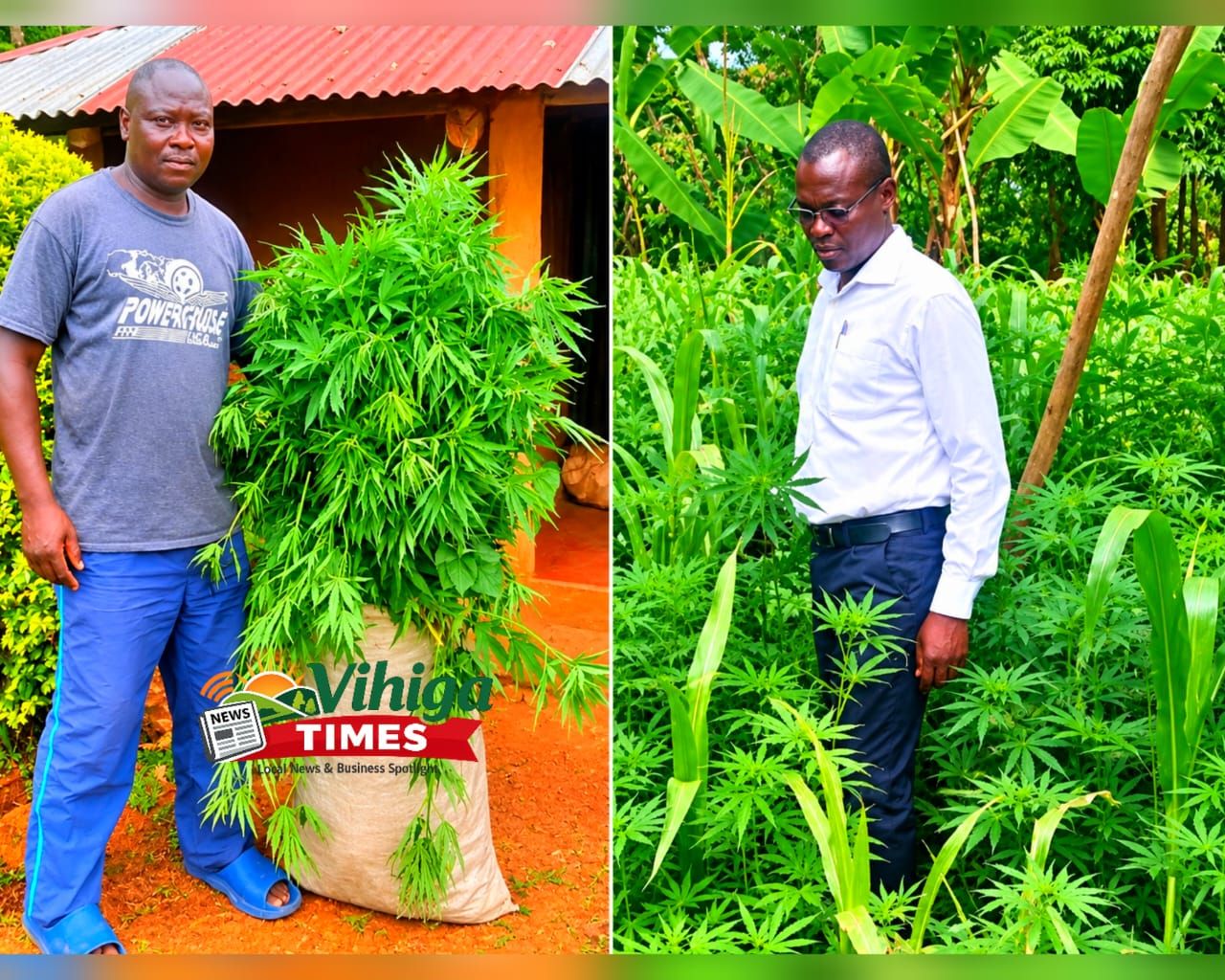
Authorities in Vihiga County destroyed 1,327 cannabis plants on Monday, September 7, 2026, after discovering the illegal crop concealed inside a maize plantation in Wakigunyi Village.
Assistant Chief Solomon Chunguli led the operation that uncovered the cannabis plants intercropped with maize in what investigators described as a deliberate attempt to disguise the illegal cultivation as a legitimate food farm.
Concealment Method Exposed
The cannabis plants were found growing among maize stalks, a tactic that has been documented in other parts of Kenya. The National Police Service has previously noted that suspects use this method to evade detection by creating the appearance of an ordinary farm.
Maize plants, which can grow between 1.5 and 2.5 metres tall, provide visual cover that makes cannabis less visible from a distance. This reduces the likelihood of reporting by neighbours or passers-by in rural farming areas where maize cultivation is common and expected.
Owner Escapes Arrest
The owner of the maize plantation was not apprehended during the operation and remains at large. The uprooted cannabis plants were booked at Mbale Police Station in Vihiga County as exhibits for further investigation.
Authorities are conducting follow-up investigations to identify and locate the suspect, who fled before the operation concluded.
- Location: Wakigunyi Village, Vihiga County
- Plants Destroyed: 1,327 cannabis plants
- Disguise: Intercropped with maize
- Operation Lead: Assistant Chief Solomon Chunguli
- Suspect Status: Owner escaped, remains at large
- Evidence Booked: Mbale Police Station
Recent Cannabis Operations in Western Kenya
The Wakigunyi seizure comes amid a series of cannabis-related enforcement actions across Western Kenya and other parts of the country in 2026.
In Vihiga County alone, police arrested three suspects and confiscated substantial quantities of bhang alongside 560 litres of illicit brew during an operation in Musasa Village, Tiriki East Sub-County, on July 30, 2026. Another suspect was arrested in Esiliebi Village, Emuhaya Sub-County, in June 2026 with approximately 100 litres of illicit brew and suspected cannabis.
Neighbouring counties have also recorded major seizures. In Busia Township, three suspects were arrested in August 2026 after police recovered nearly 781 kilograms of cannabis worth approximately Sh23.4 million from a residential house. Police in Webuye West, Bungoma County, arrested a suspect and recovered 288 bundles of suspected cannabis concealed in Napier grass along the Bukembe–Malaba Highway on August 14, 2026.
Legal Consequences
Under Kenyan law, cannabis is classified as a narcotic drug, and its cultivation, possession, sale and trafficking are criminal offences under the Narcotic Drugs and Psychotropic Substances (Control) Act, 1994.
Convictions can result in imprisonment ranging from several years to life for large-scale trafficking, substantial fines, or both. Growing cannabis plants is illegal regardless of the number of plants or intended use.
- Emergency: 999 or 911
- DCI Toll-Free: 0800 722 203
- DCI WhatsApp: 0709 570 000
- Report suspicious cannabis cultivation or drug activity to the nearest police station.
- Community cooperation is vital to curb drug trafficking and protect youth.
What Residents Should Know
Members of the public are encouraged to report suspicious activities, including suspected cannabis cultivation, to the nearest police station, via emergency numbers 999 or 911, or through the DCI toll-free line on 0800 722 203 and WhatsApp number 0709 570 000.
Authorities say cannabis cultivation can negatively affect communities by attracting criminal activity, undermining legitimate agriculture, and exposing youth to drug use.
Investigations Continue
The uprooted plants have been secured as exhibits at Mbale Police Station. Further action is expected as investigators work to identify and apprehend the plantation owner, who remains at large.