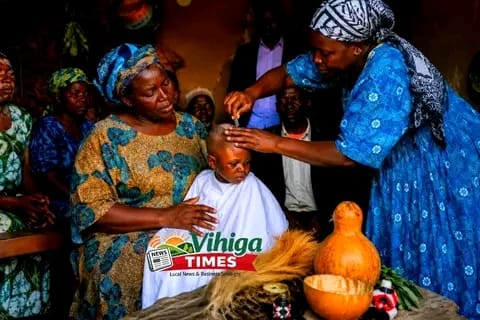
Luyah Newborn Hair Shaving Tradition: Balancing Cultural Heritage With Modern Medical Safety
Have you ever wondered why, in many African communities, a newborn baby's hair is traditionally shaved a few days, weeks or months after birth?
For many African families, this is much more than simply cutting hair. In some communities, the first shaving of a baby's hair is a cultural rite of passage that may symbolize cleansing, a fresh beginning, removing the hair the baby was born with, welcoming the child into the family or community, or marking an important stage in the child's life.
Cultural Beliefs and Practices
The practice differs greatly from one community to another. Some families shave the baby completely, while others remove only a small portion of hair. In some traditions, particular relatives perform the shaving, and the event may be accompanied by prayers, blessings, celebrations or other rituals.
In some communities, there are strong beliefs surrounding what happens if the baby is not shaved. A family may be told that failing to perform the ritual could bring bad luck, affect the child's future, cause illness, or mean that the child has not properly been welcomed into the community.
These beliefs are deeply rooted in culture and should not simply be mocked or dismissed.
What Modern Medicine Says
However, culture and medical facts are not always the same thing.
From a medical perspective, a newborn does not need to have their hair shaved for them to be healthy. Shaving the hair does not make it grow thicker, stronger or faster. Hair thickness and growth are largely determined by genetics and the natural hair-growth cycle.
This is a common myth across many cultures, including African, Asian and Indian communities where the mundan ceremony (first haircut) is practiced.
The Real Concern: How the Shaving Is Done
The real medical concern is not whether shaving occurs, but how the shaving is done.
If shaving is performed using an unclean razor or blade, there is a risk of introducing bacteria into tiny cuts or scratches on the baby's delicate scalp.
Key risks include:
- Infection from unsterile equipment: Sharing shaving equipment between babies can potentially transmit infections, including hepatitis B, hepatitis C and other bloodborne diseases.
- Cuts and skin irritation: Using excessive force may cause cuts, skin irritation or inflammation on the baby's sensitive scalp.
- Harmful substances: Applying substances that are not intended for newborn skin to the scalp can cause irritation or allergic reactions.
- Damage to soft spot: In babies under about eighteen months, the soft spot (fontanelle) on the head has not fully closed, and pressure or cuts in this area can be dangerous.
A newborn's immune system and skin barrier are still developing, so hygiene matters enormously.
Is Newborn Shaving an Outdated Practice?
Not necessarily.
A cultural practice does not automatically become "backward" simply because modern medicine does not require it.
If a family chooses to shave their baby's hair because it is an important part of their culture, there is generally no medical reason to forbid the practice provided it is performed safely.
The important question is not necessarily: "Should Africans stop shaving newborns?"
A better question is: "How can we preserve our cultural traditions while protecting our babies from preventable harm?"
- Use a clean, sterile, single-use blade or razor; never share equipment between children.
- Consider using an electric trimmer with a guard – far safer for a wriggling baby.
- Avoid shaving over irritated, infected or wounded scalp; watch for the soft spot.
- Avoid applying unknown herbs, chemicals or irritating substances to the scalp.
- Wash hands thoroughly; use clean towels and water; ensure the location is hygienic.
- After shaving, wash scalp gently, pat dry, and monitor for signs of infection.
Safety Guidelines for Families Who Choose to Shave
If a family chooses to shave the baby, medical experts recommend the following safety measures:
- Use Clean, Sterile Equipment – Use a clean, sterile, single-use blade or razor where possible. Never share shaving equipment between children. Take your own new blade or use a barber who opens a new one in front of you. Consider using an electric trimmer with a guard, which is far safer for a wriggling baby and is now widely accepted for ceremonies like mundan.
- Gentle Technique – Avoid shaving aggressively or repeatedly over the same area. Do not shave over an irritated, infected or wounded scalp. Watch for the soft spot in a baby under about eighteen months — pressure there is not safe, and anyone who is rough should be stopped. Do not use a razor on a struggling child.
- Avoid Harmful Substances – Avoid applying unknown herbs, chemicals or irritating substances to the baby's scalp. If moisturizing is needed, use light, baby-safe products like a little coconut oil if the skin looks dry.
- Proper Hygiene – Anyone performing the shaving should wash their hands thoroughly. Use a clean towel and your own water where the venue's water is doubtful. Ensure the location is clean and hygienic.
- Aftercare – Wash the scalp gently with plain water, pat dry, and apply a light moisturiser if the skin looks dry. Monitor for signs of infection or irritation.
- Know When to Seek Medical Help – If the baby develops any of the following after shaving, seek medical attention immediately: swelling, pus or discharge, spreading redness, fever, significant skin irritation, a cut that will not stop bleeding, a wound that becomes red, hot, swollen or discharges pus, or a rash spreading from the scalp.
Culture Should Evolve, Not Disappear
Africa has incredibly rich traditions surrounding childbirth, naming ceremonies, breastfeeding, circumcision, hair, clothing and welcoming a child into the family.
We don't have to choose between African culture and modern medicine.
We can respect our traditions while removing practices that are harmful and improving the way harmless traditions are performed.
Bridging Generations: Talking to Elders
So if your grandmother says: "This baby must be shaved!" — before you start arguing, ask her why.
You might discover a beautiful story about your family's culture.
And if you decide to continue the tradition, simply make sure that culture is accompanied by hygiene and safety.
Because preserving our heritage is beautiful. But protecting the baby comes first.
- Respect culture – understand the meaning and value of traditions.
- Know the facts – shaving doesn't make hair grow thicker.
- Prioritize safety – use sterile equipment, good hygiene, avoid harmful substances.
- Monitor baby – watch for signs of infection and seek medical help if needed.
- Bridge generations – talk to elders and share safety information with respect.
Broader Context: African Newborn Traditions
The hair shaving tradition is just one of many newborn customs across African communities.
Other common traditions include:
- Naming ceremonies: Held on specific days after birth (often 7th, 8th, 11th or 12th day) with prayers, blessings and community celebration.
- Umbilical cord care: Traditional practices around cord cutting and care, though modern medicine recommends disinfecting with iodine to prevent infection.
- Breastfeeding practices: Cultural beliefs about when and how to initiate breastfeeding, with modern medicine emphasizing colostrum within the first hour.
- Protective rituals: Various customs to protect the baby from evil spirits, illness or bad luck.
Many of these traditions can be safely practiced alongside modern medical guidance when families are informed about potential risks and safety measures.
Common Questions From Parents
Q: When is the right time to shave a baby's hair?
A: Traditions vary. Some communities shave within the first few days, others wait weeks or months. In Hindu mundan ceremonies, it's often done in the 1st or 3rd year. Medically, there's no required timing — it's a family choice.
Q: Will shaving make my baby's hair grow back thicker?
A: No. Hair thickness and growth are determined by genetics and natural hair-growth cycles, not by shaving. This is a common myth.
Q: Is it safe to do the ceremony at home or in a temple/community gathering?
A: Yes, if the blade is new and opened in front of you, and the hands doing it are clean. That is the most important condition.
Q: What if my baby has cradle cap or skin irritation?
A: Do not shave over an irritated, infected or wounded scalp. Wait until the skin has healed, and consult a pediatrician if you're concerned.
Q: Can I use scissors instead of a razor?
A: Scissors can be used carefully for trimming, but should only cut the hair tips, not close to the scalp. Use special baby scissors with rounded ends, and only after 6 months if medically indicated.
The Bottom Line
The African tradition of shaving newborn hair is a meaningful cultural practice that can be safely continued when families prioritize hygiene and safety.
By combining respect for heritage with modern medical knowledge, African families can preserve their traditions while ensuring the health and safety of their babies.
Share Your Thoughts
We would like to hear from you.
- What cultural traditions around newborn care do you practice in your family?
- How can we balance cultural heritage with modern medical safety?
- What additional safety measures would you recommend for traditional ceremonies involving babies?
For official updates or emergency assistance, residents are advised to contact the relevant authorities.