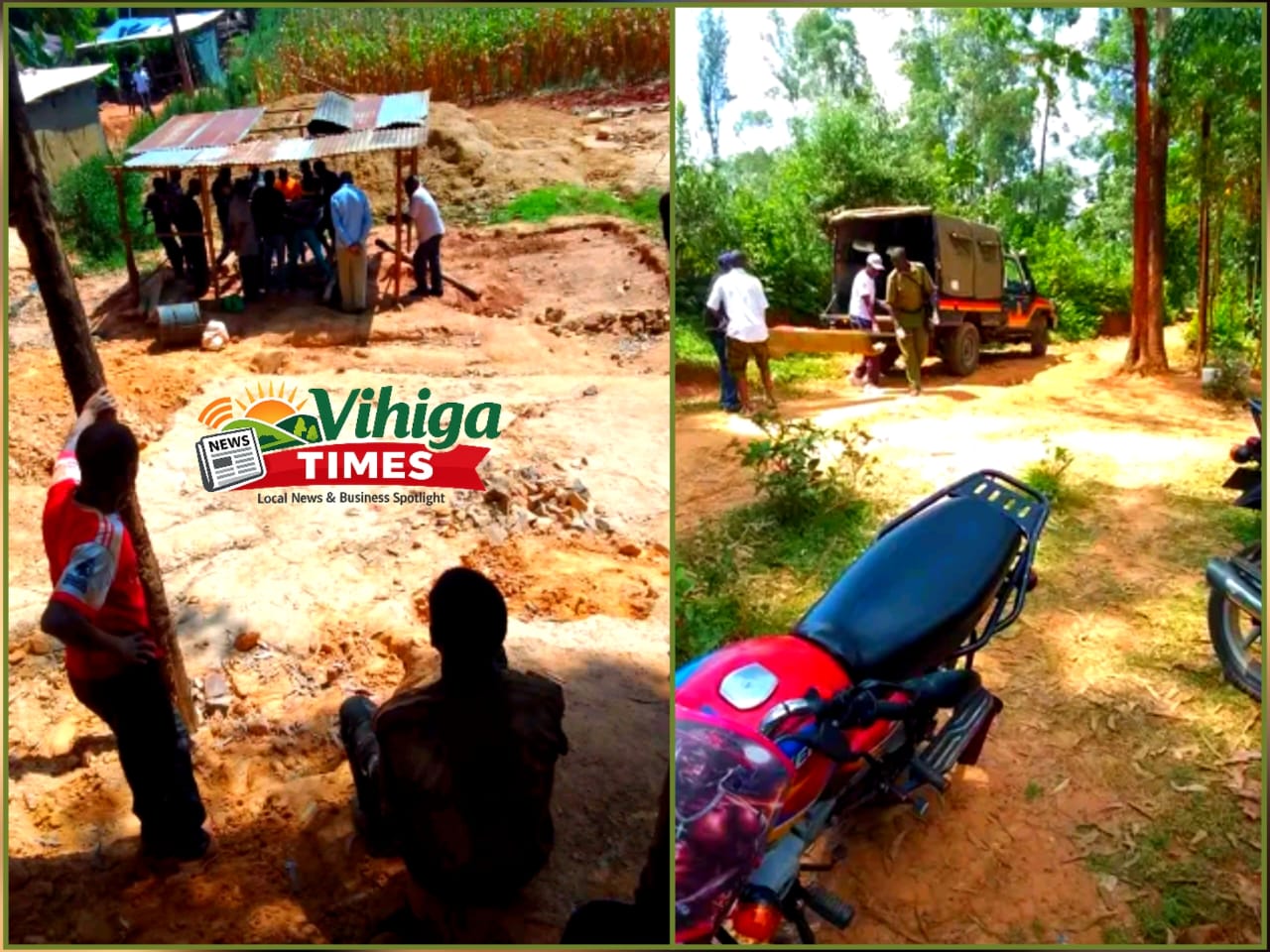
Residents of Havuyiya Village in Chavakali Ward, Sabatia Constituency, are mourning the death of a man identified as Haron Odiaga, who died at a local gold mining site.
The incident occurred at one of the area's artisanal mining pits, where residents say the deceased had entered shortly before the tragedy. The exact cause of death has not yet been officially established.
Residents have shared differing accounts of what may have happened. Some believe the deceased may have experienced difficulty breathing while inside the shaft, while others suggest he may have slipped while accessing the pit. These accounts have not been independently confirmed.
The body was moved to a mortuary, where a post-mortem examination is expected to determine the cause of death. At the time of publication, authorities had not released an official statement explaining the circumstances surrounding the incident.
Official Response
Police and county authorities had not issued an official report by the time this story was published. Residents say they are waiting for the findings of investigators and the post-mortem examination to establish whether the death resulted from suffocation, a fall, or another hazard associated with underground mining.
Vihiga Times will update this story once official information becomes available.
Why This Matters
The incident has renewed concern over safety conditions at artisanal gold mining sites across Vihiga County. For many families, small-scale mining provides one of the few available sources of income. However, miners often work in narrow underground shafts that may lack adequate ventilation, structural reinforcement, water drainage systems and emergency rescue equipment.
- Lack of proper underground ventilation and airflow systems.
- Insufficient structural reinforcement in narrow shafts.
- Absence of water drainage systems in deep pits.
- Limited or no emergency rescue equipment and training.
Without proper safety measures, underground mining can expose workers to serious risks, including tunnel collapses, oxygen shortages and flooding. The latest tragedy has once again highlighted the need for stronger safety standards to protect miners and reduce preventable deaths.
Community Impact
Residents say the death has reopened long-standing discussions about the safety of artisanal mining operations in Havuyiya and other parts of Vihiga County. During previous visits to local mining sites, Vihiga Times observed that some miners relied on improvised methods to improve airflow inside deep shafts. In some cases, household hair dryers and other non-industrial equipment were reportedly used in attempts to push fresh air underground.
Mining safety experts generally advise against such practices, noting that equipment designed for domestic use is not suitable for underground ventilation. Residents also report that some pits lack proper tunnel support and water management systems, increasing the risks faced by miners working below the surface. Despite these dangers, many people continue mining because of limited employment opportunities and the hope of earning a livelihood.
Community leaders say the tragedy should prompt county officials to conduct comprehensive safety audits of all active mining sites in the area. They argue that without formal oversight, miners will continue to face preventable dangers while pursuing their only available source of income.
Local elders have also called for training programmes that teach miners basic safety protocols, including how to recognise signs of oxygen depletion and how to respond to tunnel collapses or flooding.
Safety & Prevention
Mining safety specialists recommend several measures to reduce risks in artisanal mining operations. Communities are also encouraged to report unsafe mining practices to the relevant authorities and avoid entering unstable or abandoned shafts.
- Providing proper underground ventilation systems.
- Reinforcing tunnels to reduce the risk of collapse.
- Regularly inspecting shafts for structural weaknesses.
- Installing water drainage systems where necessary.
- Training miners on emergency response procedures.
- Avoiding the use of improvised equipment not designed for underground mining.
Parents and community leaders should also discourage young people from entering mining shafts without proper training and safety gear. Where possible, miners should work in teams so that someone remains above ground to raise an alarm if an accident occurs.
What Happens Next
Investigators are expected to rely on the post-mortem examination and any official inspections of the mining site to determine the exact cause of death. Depending on the findings, authorities may assess whether safety failures contributed to the incident and whether additional measures are needed to improve conditions at artisanal mining sites across the county.
As the investigation continues, residents hope the tragedy will lead to stronger oversight and improved safety standards to help prevent similar incidents in the future. Vihiga Times will continue to follow this story and provide updates as official information becomes available.
Share Your Thoughts
We would like to hear from you.
- What safety measures should county authorities enforce at artisanal mining sites?
- How can communities balance the need for income with the dangers of small-scale mining?
- Have you or someone you know worked at a local mining site? What safety conditions did you observe?
For official updates or emergency assistance, residents are advised to contact the relevant authorities.