What Happened
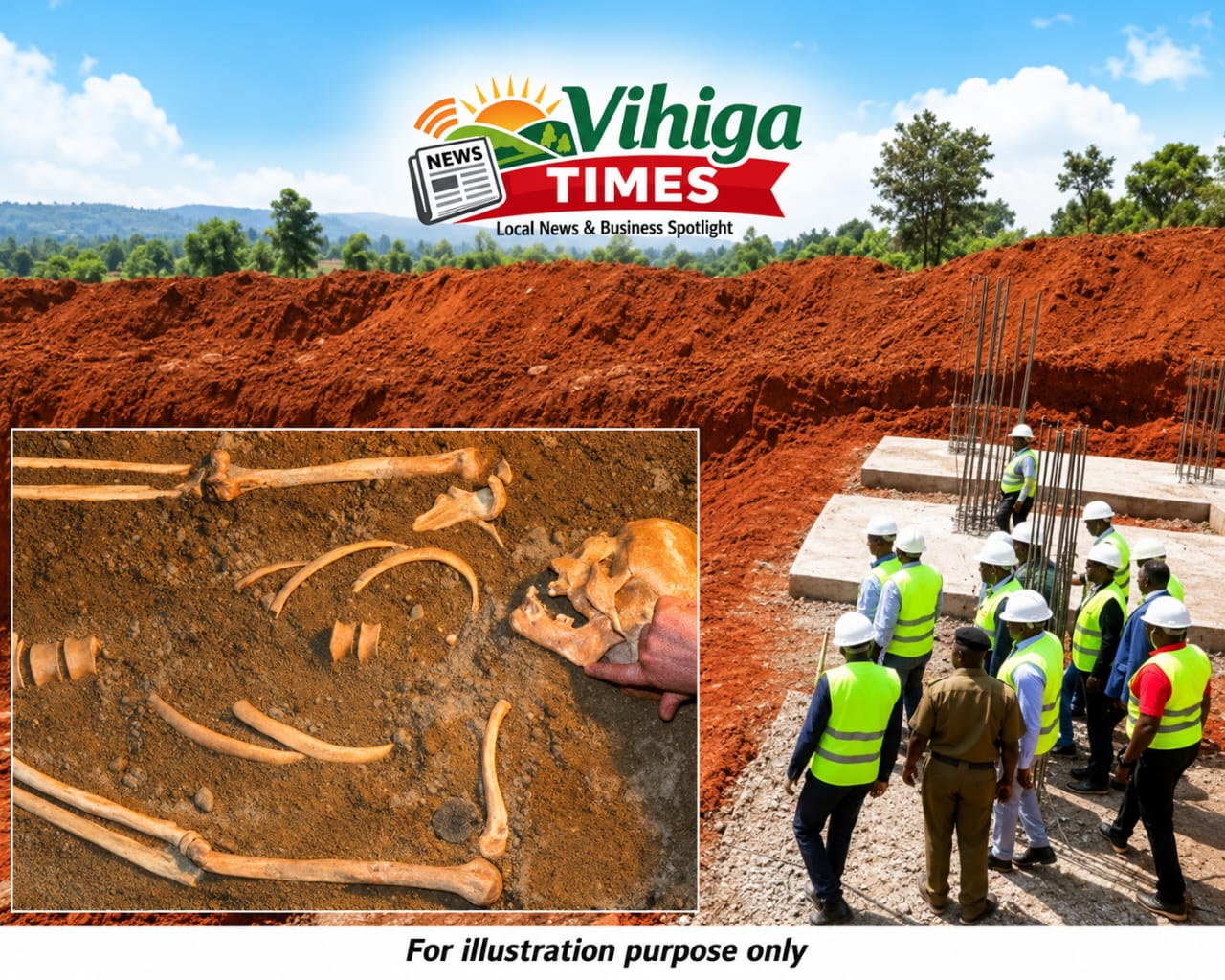
Construction work at the Kidundu Stadium project in Vihiga County has raised concerns after workers reportedly uncovered suspected human remains during excavation. The discovery has prompted questions from residents and local leaders over whether all graves on the site were properly exhumed before construction began.
According to workers at the site, bone fragments were discovered while excavating the stadium's foundation. Community members say the land was once occupied by families, and that several burial sites existed there before the area was cleared for the project.
Residents interviewed by Vihiga Times said that when the land was acquired, affected families were informed that they could exhume and rebury the remains of their loved ones elsewhere. However, some believe not every grave was relocated, either because families did not return or because some burial sites were unknown at the time.
As of publication, authorities had not confirmed the exact number of remains found or whether all exhumation procedures had been completed before construction commenced.
Official Response
Vihiga Times sought comment from Vihiga County officials, the stadium project contractor, and relevant authorities regarding the reported discovery.
At the time of publication, no comprehensive official statement had been released detailing the findings or outlining the procedures being followed. County communication officials acknowledged awareness of the reports but had not issued a formal public update.
Questions were also raised about whether the project's Environmental Impact Assessment (EIA) identified the possibility of historical graves on the site and whether appropriate exhumation permits and cultural procedures were fully implemented before construction began. Officials had not responded to these specific questions by the time this article was published.
Why This Matters
The discovery has generated legal, cultural, and emotional concerns within the community.
In many Kenyan communities, burial sites carry deep cultural and family significance. When human remains are discovered during construction projects, residents expect authorities to follow established legal procedures while ensuring that families and community elders are treated with dignity and respect.
The incident has also renewed public interest in how large public infrastructure projects manage land acquisition, relocation of families, and the handling of existing graves before construction begins.
Community Background
Residents say the land where Kidundu Stadium is being constructed was once home to several families before it was acquired for the project.
According to community accounts, affected households were compensated and given an opportunity to relocate the remains of their relatives. However, some residents believe not every burial site was identified or relocated before excavation started.
Without publicly available records detailing the exhumation process, community members say it remains difficult to establish whether all graves were lawfully and completely relocated before construction commenced.
One resident who requested anonymity said the community is not opposed to development but wants assurance that the remains of former residents are handled respectfully.
"Development is important, but our loved ones also deserve dignity. We simply want transparency and respect," the resident said.
What Procedures Are Normally Expected?
Where suspected human remains are discovered during construction, standard legal and administrative procedures generally require work around the affected area to pause while the appropriate authorities assess the site.
Depending on the circumstances, this may involve documentation of the discovery, consultation with police and relevant government departments, engagement with affected families and community leaders, and arrangements for respectful reburial where necessary.
At the time of publication, authorities had not publicly confirmed whether these procedures had been initiated at the Kidundu Stadium site.
What Happens Next?
Residents say they are expecting a formal public briefing from Vihiga County and the project management team explaining the circumstances surrounding the discovery, the number of remains recovered, and the measures being taken to ensure lawful and respectful handling of the site.
If further investigations become necessary, the relevant government agencies may review whether all legal and environmental requirements were satisfied before construction commenced.
The story remains developing, and Vihiga Times will continue seeking responses from county officials, project managers, and other relevant authorities. This article will be updated as additional verified information becomes available.