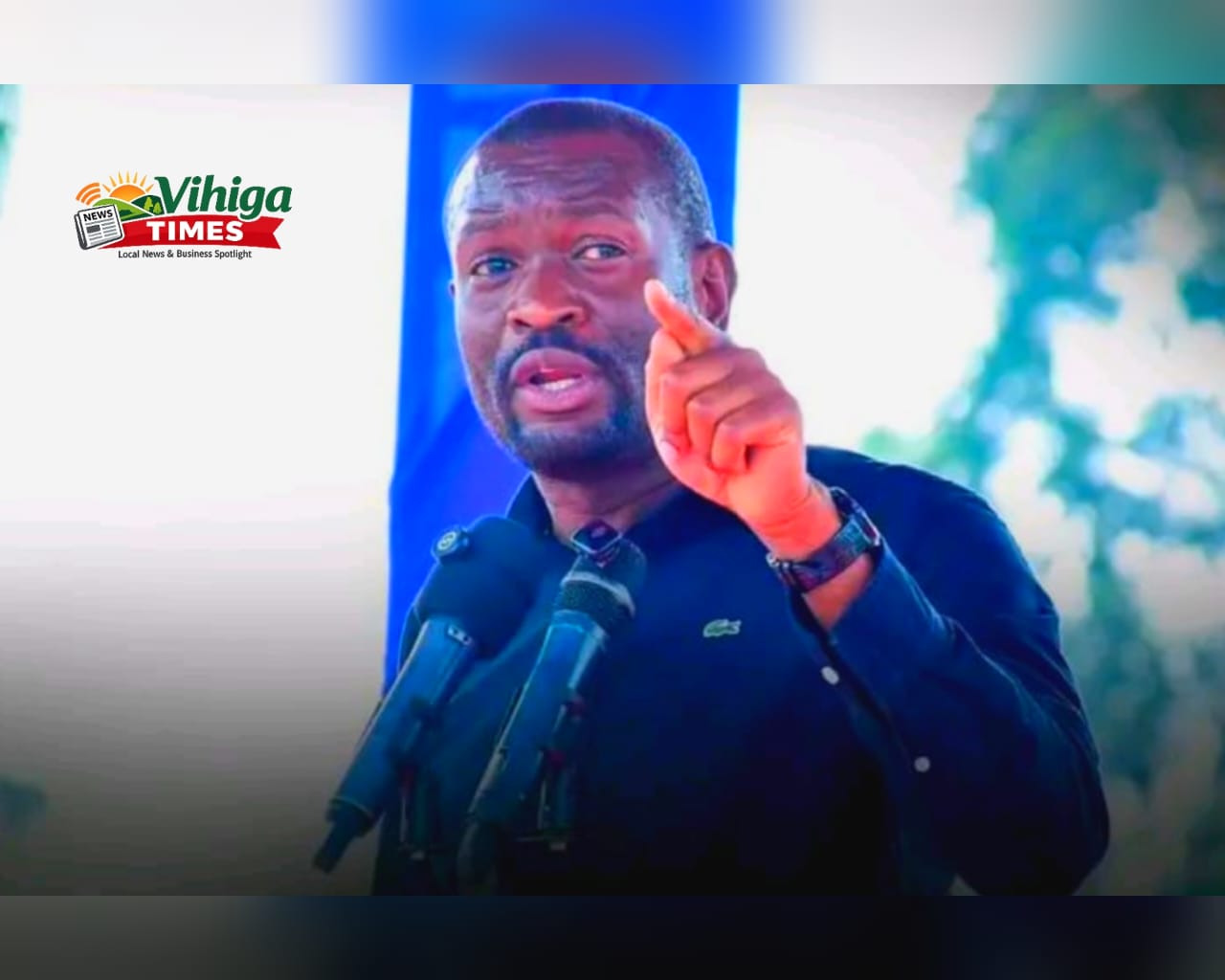
Nairobi Senator Edwin Sifuna has publicly mocked President William Ruto after the President was asked to provide evidence for his repeated claim that retired President Uhuru Kenyatta is sponsoring opposition activities.
On Sunday, August 23, 2026, Sifuna seized on Ruto's response, which pointed to a newspaper report rather than producing direct documentary or financial evidence, and turned it into a political attack on the President.
Sifuna's central argument was simple: if the President is making a serious allegation that Uhuru is financing his political opponents, he should be able to produce evidence showing the money changing hands—not simply refer to a newspaper headline.
President Ruto has repeatedly alleged that Uhuru is backing politicians positioning themselves against his re-election bid, while describing Sifuna and other opposition figures as being linked to the former President.
In a newspaper interview, Ruto was challenged to substantiate his repeated assertions that Uhuru was sponsoring opposition figures positioning themselves against him ahead of the 2027 General Election. According to Sifuna, Ruto admitted that his only source was media reports.
Sifuna also highlighted what he sees as an apparent contradiction in Ruto's position, noting that the President has frequently dismissed newspaper reports as "fake news" when they are unfavourable to him.
Why This Matters
The latest exchange between Nairobi Senator Edwin Sifuna and President William Ruto is not an isolated political quarrel. It is the latest chapter in a much larger struggle over the direction of Kenya's opposition, the legacy of former President Uhuru Kenyatta, and the political battle already taking shape ahead of the 2027 General Election.
- President William Ruto: Claims Uhuru is financing opposition activities.
- Senator Edwin Sifuna: Denies the claims, challenges Ruto to provide evidence.
- Retired President Uhuru Kenyatta: Publicly distanced himself from the allegations.
- Linda Mwananchi: Grassroots movement associated with Sifuna, raised KSh6.5M through public Paybill.
The roots of the dispute go back several months, as political activity around Sifuna's Linda Mwananchi movement intensified. Linda Mwananchi emerged as a grassroots political initiative associated with Sifuna as he toured different parts of Kenya and positioned himself as one of the voices challenging the Ruto administration.
That political activity immediately generated speculation about where the movement was getting its money. In February 2026, President Ruto's close aide Farouk Kibet publicly accused Uhuru Kenyatta of financing opposition political activities, including events associated with Sifuna and Linda Mwananchi.
Community Impact or Background Context
In April, Interior Cabinet Secretary Kipchumba Murkomen also became involved in the controversy. Sifuna responded by challenging Murkomen to produce evidence that Uhuru was financing him. Sifuna's argument was particularly pointed: if government security agencies were monitoring political leaders as closely as Murkomen suggested, then they should be able to show evidence of Uhuru and Sifuna exchanging money.
On July 28, Sifuna was asked directly whether Uhuru Kenyatta was financing Linda Mwananchi. His answer was unequivocal: No. Sifuna explained that he does communicate with Uhuru, but said the relationship should not automatically be interpreted as evidence of financial sponsorship.
Sifuna also disclosed that Linda Mwananchi had raised approximately KSh6.5 million through its public fundraising Paybill. He said the movement intended to account for the money and explain how it was spent. He presented this as evidence of a different approach to political financing—one in which ordinary citizens contribute to political activities.
Safety & Prevention
Political allegations and counter-allegations can escalate tensions if not handled carefully. Important considerations include:
- ensuring that serious accusations are backed by verifiable evidence;
- avoiding inflammatory language that could incite supporters to violence;
- encouraging peaceful political competition and debate;
- respecting the right of citizens to support different political movements;
- focusing on policy issues rather than personal attacks.
- Critically evaluate political claims and seek verified information.
- Do not share unverified allegations that could incite conflict.
- Focus on policy issues and evidence-based arguments.
- Respect diverse political opinions and peaceful dissent.
Citizens should also critically evaluate political claims and seek verified information before forming opinions.
What Happens Next
The issue became even more prominent in July, with Sifuna directly addressing the Uhuru question and maintaining that Linda Mwananchi's activities were supported by members, politicians and ordinary Kenyans rather than secretly financed by Uhuru.
Uhuru Kenyatta has also publicly distanced himself from Senator Edwin Sifuna, insisting he is not the financier behind the ODM rebel leader's political movement. At the 23rd anniversary of the late former Vice President Michael Kijana Wamalwa in Kitale on Saturday, August 23, Uhuru said: "Please be cautious. I do not want to be called a sponsor or involved in issues."
The former President's "sponsor" remark is likely to add fresh fuel to the ongoing political debate over his alleged role in financing opposition activities, claims that he and leaders associated with the Linda Mwananchi movement have denied.
Share Your Thoughts
We would like to hear from you.
- Should President Ruto provide evidence for his claims that Uhuru is financing opposition activities?
- How should political movements like Linda Mwananchi ensure transparency in their funding?
- What role should former presidents play in contemporary politics?
For official updates or emergency assistance, residents are advised to contact the relevant authorities.